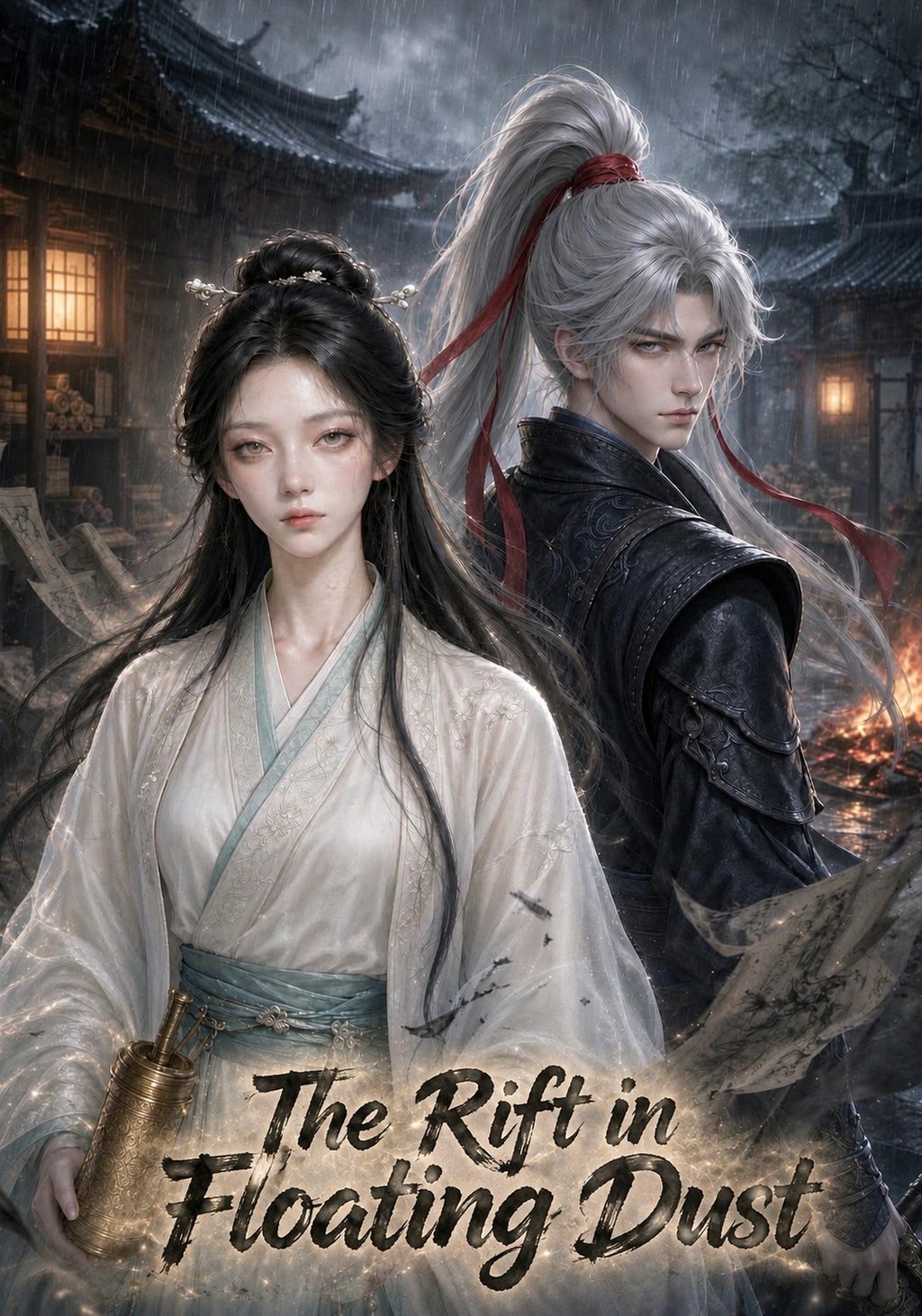
The Rift in Floating Dust
"Floating dust" represents the rise and fall of everyday human life, while the "rift" is a forgotten corner of the world, where all lingering obsessions find shelter. In a world where humans and demons coexist, countless such "rifts" lie hidden. They neither devour people nor claim lives; they merely shelter obsessions that have been forgotten. Wangshu neither slays demons nor saves people. Instead, for each buried story of the past, Wangshu seeks a way to bring it to resolution. Old talismans illuminate the human world, while obsessions illuminate the human heart. They cannot rewrite history, but they can make sure the stories are heard. In an old Jiangnan bookshop, a scholar writes a political essay detailing the suffering of displaced people. He would rather see his writing burned than remain silent. Demons do not harm people; people imprison themselves.
Main characters: Wangshu
Also known as: 浮尘隙
떠도는 먼지의 틈 (20화)
‘떠도는 먼지’는 인간 세상의 평범한 삶이 겪는 부침을 뜻하고, ‘틈’은 세상 사람들에게 잊힌 구석이자 모든 집념이 숨어드는 곳이다. 인간과 요괴가 공존하는 세상에는 수많은 ‘틈’이 감춰져 있다. 그것들은 사람을 삼키지도, 목숨을 빼앗지도 않고, 그저 잊힌 집념을 품어 줄 뿐이다.…
‘떠도는 먼지’는 인간 세상의 평범한 삶이 겪는 부침을 뜻하고, ‘틈’은 세상 사람들에게 잊힌 구석이자 모든 집념이 숨어드는 곳이다. 인간과 요괴가 공존하는 세상에는 수많은 ‘틈’이 감춰져 있다. 그것들은 사람을 삼키지도, 목숨을 빼앗지도 않고, 그저 잊힌 집념을 품어 줄 뿐이다. 왕수는 요괴를 베지도, 사람을 구하지도 않는다. 그저 묻혀 버린 옛이야기 하나하나가 풀려날 길을 찾을 뿐이다. 오래된 부적은 인간 세상을 비추고, 집념은 사람의 마음을 비춘다. 그들은 역사를 바꿀 수는 없지만, 이야기가 사람들에게 전해지게 할 수는 있다. 강남의 오래된 서점에서 한 선비가 유민들의 고통을 낱낱이 담은 시무책을 쓴다. 그는 침묵하느니 차라리 글이 불태워지는 것을 택한다. 요괴는 사람을 해치지 않는다. 사람은 스스로를 가둔다.
浮尘隙 · The Rift in Floating Dust